
 +91-9467808888
 acudoctor.in@gmail.com
 ACUDOCTOR Health Institute 161, Sirsa Road, Near Hanuman Mandir Housing Board Colony Hisar, Haryana – 125001

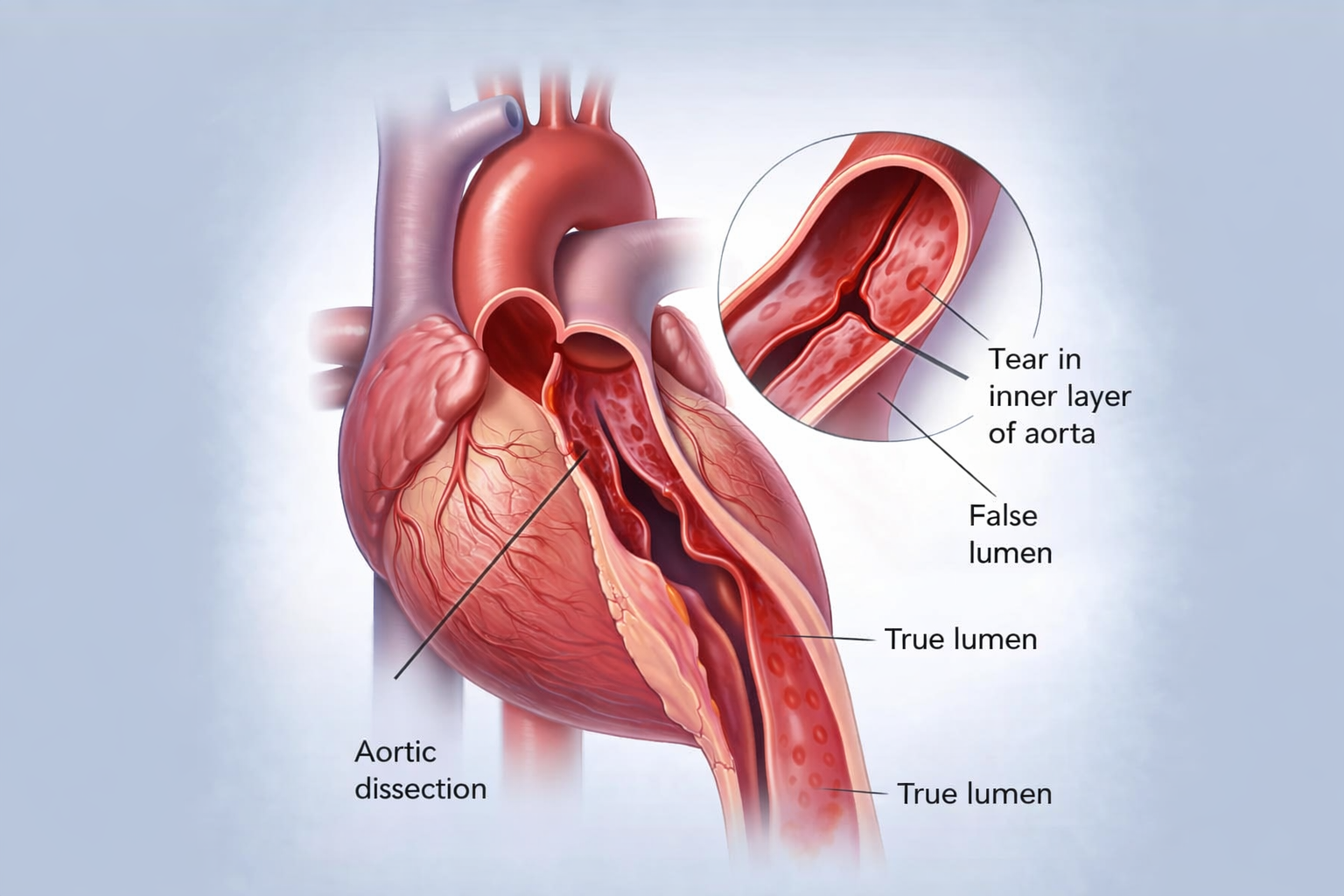
Aortic Dissection
Aortic dissection is a serious and life-threatening condition in which a tear develops in the inner layer of the aorta, the main blood vessel carrying blood from the heart to the body. When this tear occurs, blood flows between the layers of the aortic wall, forcing them apart.
This condition can interrupt blood flow to vital organs such as the brain, kidneys, or heart. Aortic dissection requires immediate medical attention, as delayed treatment can lead to rupture of the aorta, stroke, organ failure, or death.
It is most commonly seen in people with long-standing high blood pressure, connective tissue disorders, or those with a history of heart disease.
Causes, Symptoms and Treatment of Aortic Dissection
Aortic dissection is often caused by chronic hypertension that weakens the aortic wall over time. Other risk factors include genetic conditions such as Marfan syndrome, atherosclerosis, chest injury, and previous heart surgery.
Symptoms usually begin suddenly and may include severe chest or upper back pain described as tearing or ripping. Diagnosis is confirmed through imaging tests such as CT scan, MRI, or echocardiography.
Treatment depends on the type and severity of the dissection. Type A dissections usually require emergency surgery, while Type B dissections may be managed with medications and close monitoring.
Early diagnosis and rapid treatment significantly improve survival rates.
Symptoms:
- Sudden severe chest pain
- Sharp tearing back pain
- Shortness of breath
- Loss of consciousness
- Weak pulse in one arm
- High blood pressure
- Stroke-like symptoms
- Organ damage risk