
 +91-9467808888
 acudoctor.in@gmail.com
 ACUDOCTOR Health Institute 161, Sirsa Road, Near Hanuman Mandir Housing Board Colony Hisar, Haryana – 125001

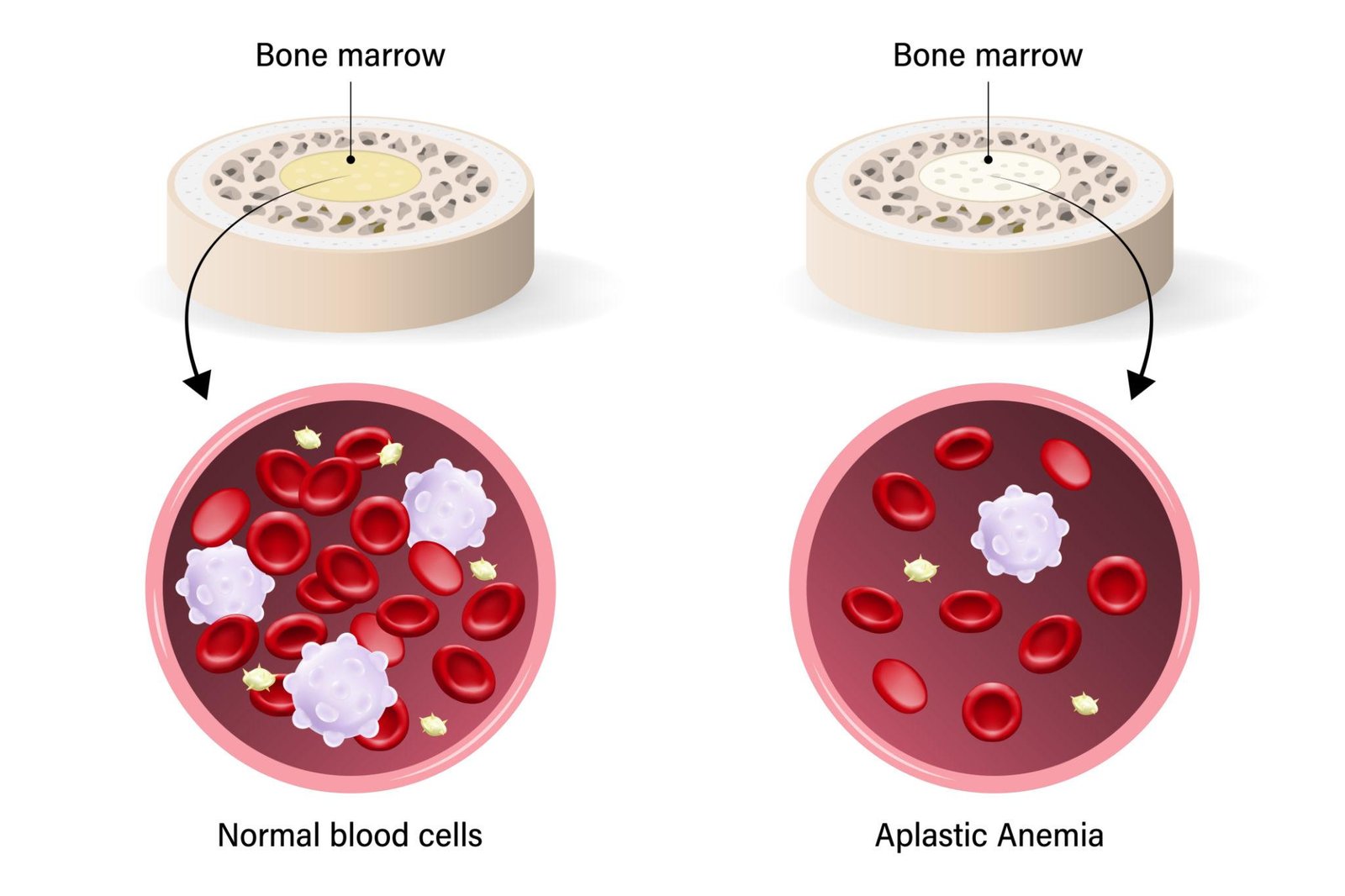
Aplastic anemia
Aplastic anemia is a rare but serious blood disorder in which the bone marrow fails to produce enough red blood cells, white blood cells, and platelets, a condition known as pancytopenia. Because the marrow becomes damaged or replaced with fatty tissue, the body cannot make the cells needed to carry oxygen, fight infections, or prevent bleeding. As a result, patients experience extreme fatigue, frequent infections, easy bruising, nosebleeds, and prolonged bleeding from minor cuts. It can be caused by autoimmune attacks on bone marrow, exposure to chemicals, radiation, certain medications, viral infections, or may occur without a known cause. Diagnosis is confirmed through blood tests and bone marrow biopsy. Treatment may include blood transfusions, immune-suppressing medications, bone marrow (stem cell) transplantation, and supportive care to prevent infections and bleeding.