
 +91-9467808888
 acudoctor.in@gmail.com
 ACUDOCTOR Health Institute 161, Sirsa Road, Near Hanuman Mandir Housing Board Colony Hisar, Haryana – 125001

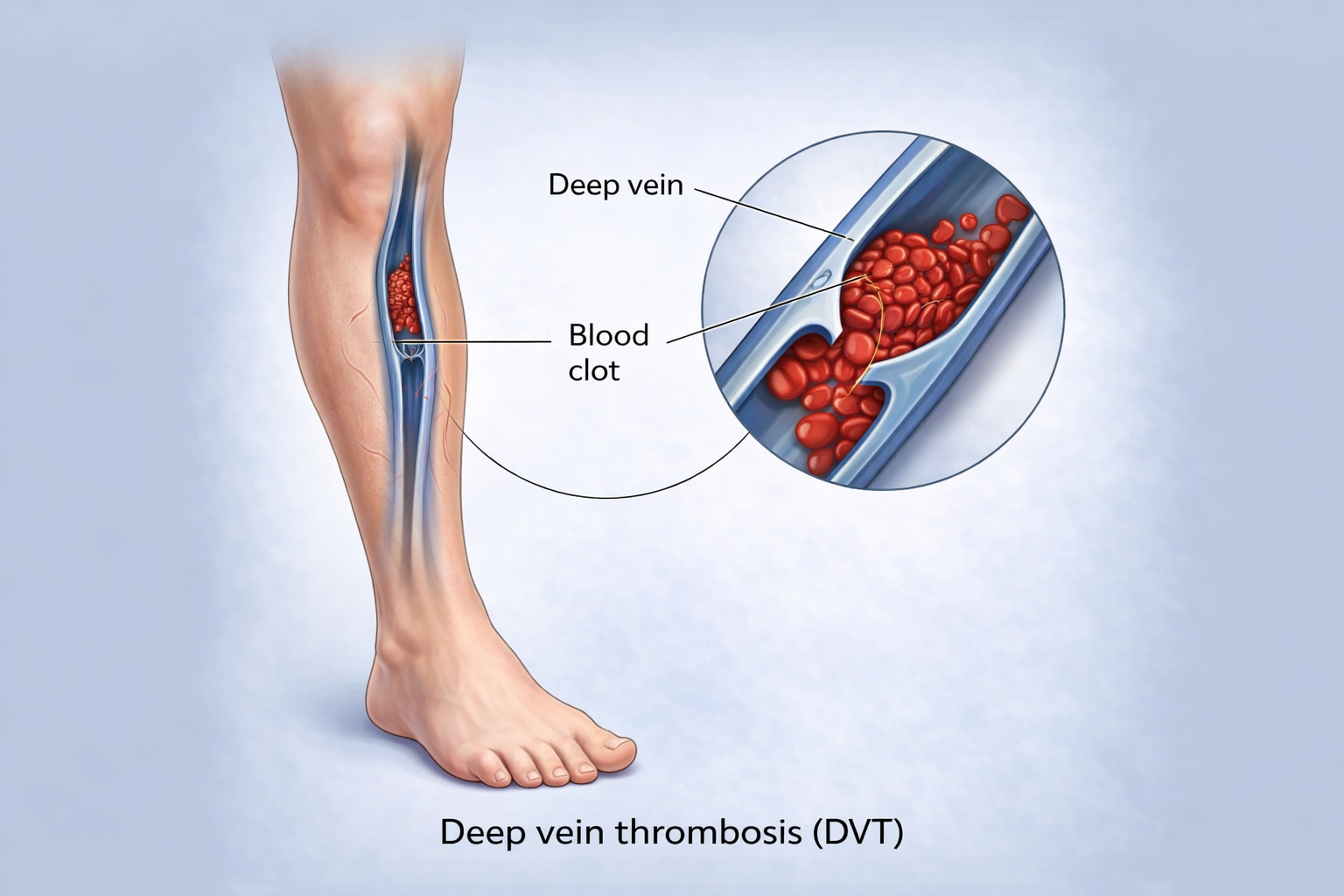
Deep Vein Thrombosis
Deep vein thrombosis (DVT) is a medical condition in which a blood clot forms in a deep vein, most commonly in the legs. These clots can partially or completely block blood flow, leading to pain, swelling, and serious complications.
The most dangerous complication of DVT occurs when part of the clot breaks off and travels to the lungs, causing a pulmonary embolism. This condition can be life-threatening and requires immediate medical attention.
DVT often develops in people who remain immobile for long periods, such as after surgery, long-distance travel, or prolonged bed rest. Early diagnosis and treatment can prevent severe complications.
Causes, Symptoms and Treatment of Deep Vein Thrombosis
Deep vein thrombosis occurs when blood flow slows down or when the blood becomes more likely to clot. Risk factors include prolonged sitting, obesity, smoking, pregnancy, cancer, hormonal therapy, and genetic clotting disorders.
Common symptoms include swelling in one leg, pain or tenderness, warmth, and skin discoloration. Some patients may have no symptoms until a pulmonary embolism develops.
Diagnosis is confirmed using Doppler ultrasound, blood tests, CT scan, or venography. Treatment typically includes blood-thinning medications, compression stockings, and in severe cases, clot-removal procedures.
Lifestyle changes and early mobilization play a major role in prevention.
Symptoms:
- Leg swelling
- Pain or tenderness in leg
- Warmth in affected area
- Red or discolored skin
- Sudden shortness of breath
- Chest pain
- Pulmonary embolism risk
- Prolonged immobility
- Blood clot formation