
 +91-9467808888
 acudoctor.in@gmail.com
 ACUDOCTOR Health Institute 161, Sirsa Road, Near Hanuman Mandir Housing Board Colony Hisar, Haryana – 125001

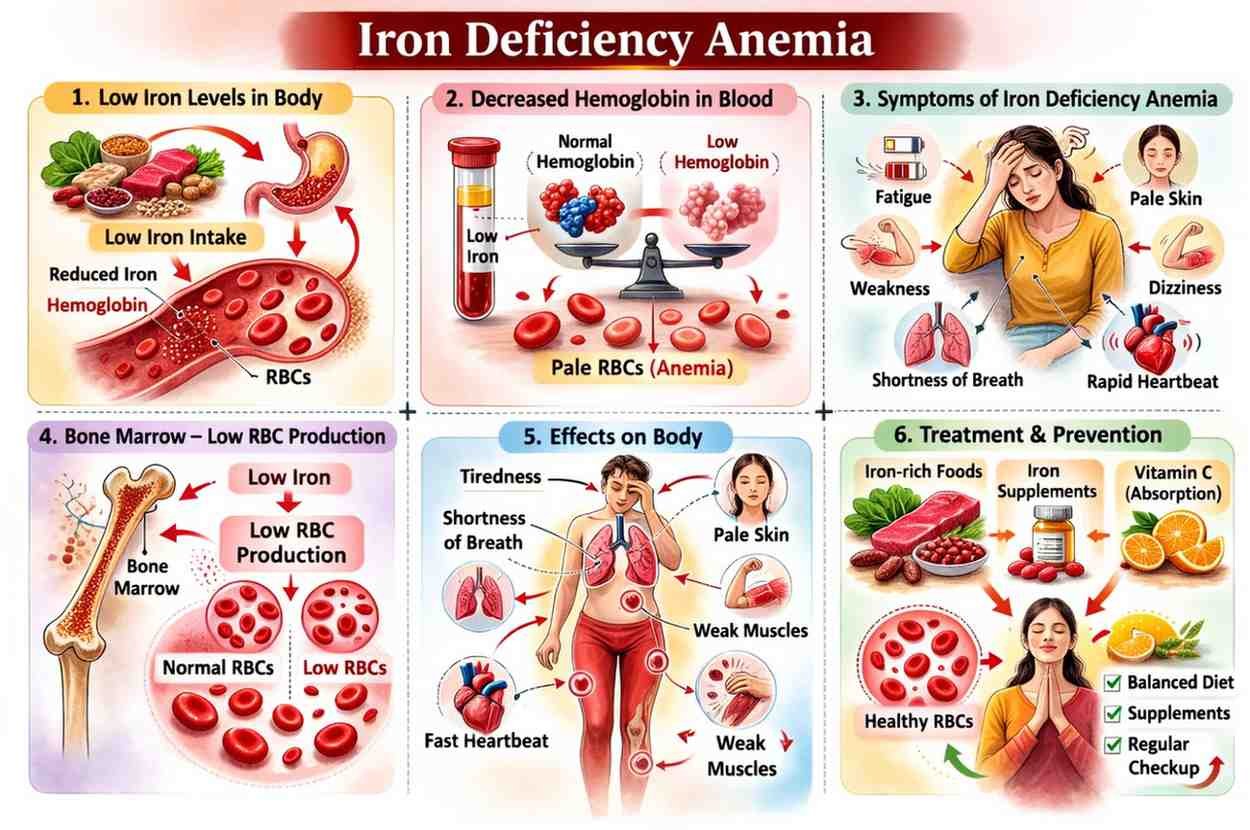
Iron deficiency anemia
Iron deficiency anemia is a common blood disorder that occurs when the body does not have enough iron to produce adequate hemoglobin, the protein in red blood cells responsible for carrying oxygen to tissues. Without sufficient iron, red blood cells become smaller, paler, and less effective at transporting oxygen, leading to symptoms such as fatigue, weakness, pale skin, shortness of breath, dizziness, cold hands and feet, and rapid heartbeat. It can result from poor dietary intake of iron, chronic blood loss (such as heavy menstruation or internal bleeding), pregnancy, or problems with iron absorption. Diagnosis is typically confirmed through blood tests measuring hemoglobin and ferritin levels. Treatment focuses on addressing the underlying cause, increasing iron intake through iron-rich foods like leafy greens and red meat, taking iron supplements, and improving absorption with vitamin C. Early detection and proper management usually lead to full recovery and prevention of complications.