
 +91-9467808888
 acudoctor.in@gmail.com
 ACUDOCTOR Health Institute 161, Sirsa Road, Near Hanuman Mandir Housing Board Colony Hisar, Haryana – 125001

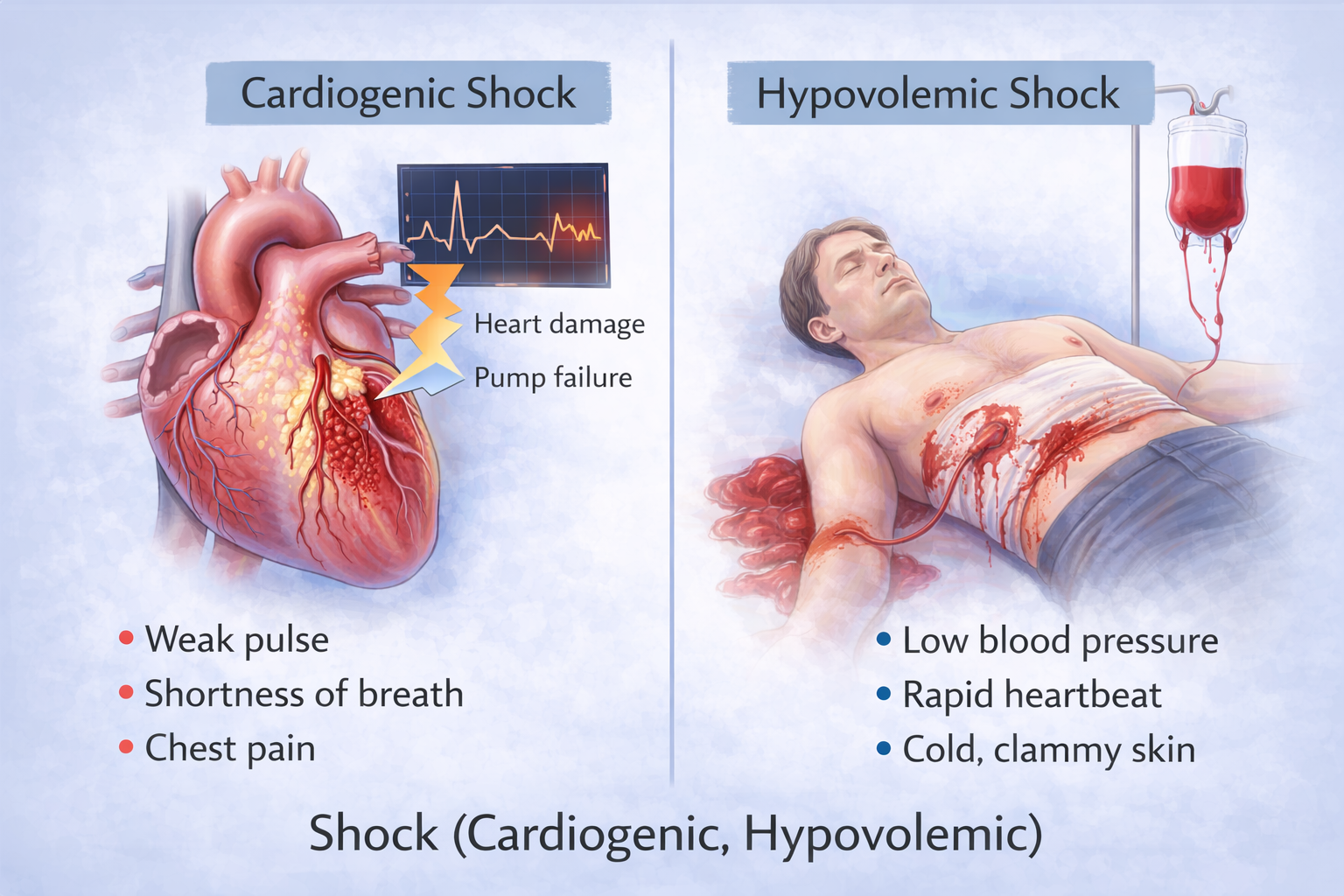
Shock (Cardiogenic, Hypovolemic)
Shock is a life-threatening medical emergency that occurs when the body does not receive enough blood flow to supply oxygen and nutrients to vital organs. Without prompt treatment, shock can quickly lead to organ failure and death.
Cardiogenic shock occurs when the heart fails to pump blood effectively, commonly due to a severe heart attack, heart failure, or serious arrhythmias.
Hypovolemic shock occurs due to severe loss of blood or body fluids, such as from trauma, surgery, burns, vomiting, diarrhea, or dehydration. This loss reduces circulating blood volume and causes a dangerous drop in blood pressure.
Immediate medical intervention is essential to restore circulation and prevent irreversible damage.
Types, Causes and Treatment of Shock
Cardiogenic shock is caused by damage to the heart muscle, leading to reduced cardiac output despite adequate blood volume. Symptoms include chest pain, shortness of breath, weak pulse, cold extremities, and confusion.
Hypovolemic shock results from massive blood or fluid loss, causing decreased preload and reduced organ perfusion. Patients may present with rapid heartbeat, low blood pressure, pale skin, excessive thirst, and reduced urine output.
Diagnosis involves clinical examination, blood tests, ECG, echocardiography, and imaging studies. Treatment includes rapid fluid resuscitation, blood transfusion, oxygen therapy, medications to support blood pressure, and treatment of the underlying cause.
Early recognition and aggressive management significantly improve survival outcomes.
Symptoms:
- Low blood pressure
- Rapid heartbeat
- Cold clammy skin
- Reduced urine output
- Confusion or unconsciousness
- Heart pump failure
- Severe blood loss
- Organ failure risk
- Medical emergency