
 +91-9467808888
 acudoctor.in@gmail.com
 ACUDOCTOR Health Institute 161, Sirsa Road, Near Hanuman Mandir Housing Board Colony Hisar, Haryana – 125001

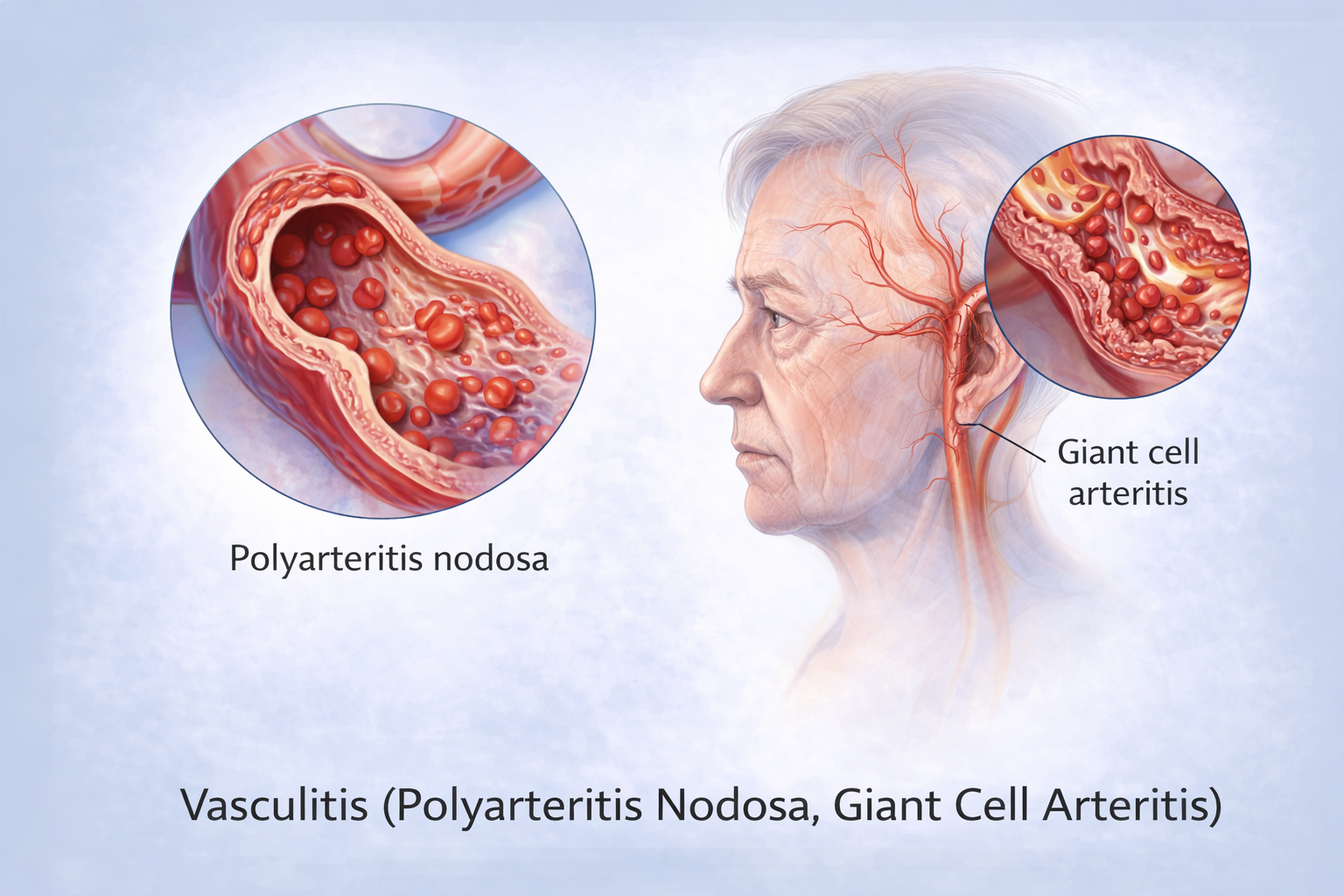
Vasculitis (Polyarteritis Nodosa, Giant Cell Arteritis)
Vasculitis is a group of disorders characterized by inflammation of blood vessels. This inflammation causes thickening, narrowing, or weakening of vessel walls, which can reduce blood flow and damage vital organs.
Polyarteritis nodosa is a form of vasculitis that affects medium-sized arteries and can involve the skin, kidneys, nerves, and gastrointestinal tract. Giant cell arteritis primarily affects large arteries, especially the temporal arteries, and is most common in older adults.
If left untreated, vasculitis can lead to organ damage, aneurysm formation, vision loss, or stroke.
Types, Causes and Treatment of Vasculitis
The exact cause of vasculitis is often unknown, but it may occur due to autoimmune reactions where the immune system attacks blood vessels. In some cases, infections, medications, or other autoimmune diseases can trigger the condition.
Symptoms vary depending on the vessels involved and may include fever, fatigue, weight loss, muscle pain, headache, jaw pain, skin rashes, numbness, and vision problems.
Diagnosis involves blood tests, imaging studies, angiography, and sometimes biopsy of the affected blood vessel. Treatment typically includes corticosteroids, immunosuppressive medications, and biologic therapies to control inflammation and prevent complications.
Early diagnosis and prompt treatment significantly improve patient outcomes.
Symptoms:
- Blood vessel inflammation
- Fever and fatigue
- Headache and jaw pain
- Skin rashes
- Nerve damage
- Vision loss risk
- Organ damage
- Autoimmune disorder
- Reduced blood flow